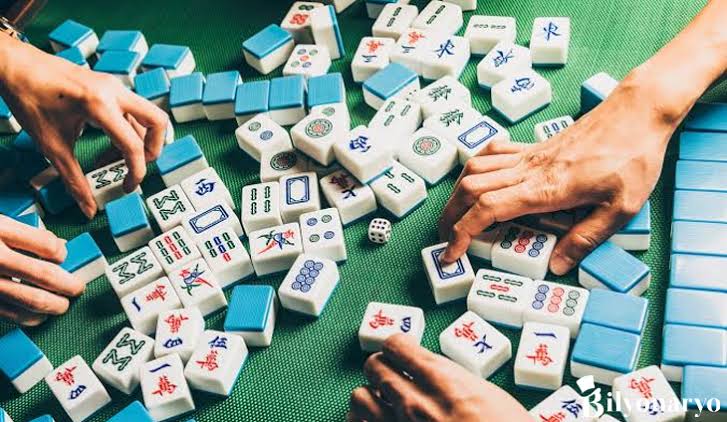
Mahjong has become one of the most recognizable traditional games associated with Chinese culture. Its distinctive tiles, structured rules, and social character have allowed it to survive significant changes in society and technology. What began as a regional pastime eventually crossed geographical boundaries, developing into numerous local forms while maintaining many of its original visual characteristics.
Historical Roots of Mahjong
The exact origins of mahjong remain debated by historians. Most historical accounts place its development in China during the nineteenth century, when several traditional tile and card games were already popular. Some theories suggest that mahjong evolved from earlier Chinese games involving numbered pieces, matching systems, and structured combinations.
During the late Qing period, the game became increasingly popular in different parts of China. Its social nature made it suitable for gatherings involving family members, friends, merchants, and various community groups. As people traveled between regions, differences in rules and scoring gradually emerged.
Mahjong subsequently reached communities outside mainland China through migration, trade, and international contact. These movements played an important role in transforming a primarily regional pastime into a game with an increasingly international presence.
Mahjong and Chinese Social Culture
Mahjong has historically represented more than a form of entertainment. In many communities, playing the game has been associated with social interaction, family gatherings, and communal activities. A traditional session requires several participants to sit together, observe the tiles, make decisions, and respond to the actions of other players.
The tiles themselves also carry significant visual characteristics. Characters, bamboo patterns, circles, winds, dragons, and flower symbols create an identifiable artistic language. Their designs have remained recognizable even when the rules and presentation of the game have changed between regions.
Different communities have developed their own systems. Chinese Classical Mahjong, Hong Kong Mahjong, and Japanese Riichi Mahjong demonstrate how variations can develop from the same basic foundation. Differences may involve scoring, winning conditions, tile availability, and strategic conventions.
Regional Variations and Adaptation
As mahjong spread internationally, local communities adapted its rules according to their own preferences. Japanese Riichi Mahjong, for example, developed a highly structured scoring system and specific declarations that distinguish it from many Chinese formats. Other regional versions simplified or modified certain aspects to accommodate local playing styles.
These differences illustrate the flexibility of mahjong as a cultural practice. Rather than following one universal rulebook, the game developed into a collection of related traditions. Physical tile designs also changed slightly according to manufacturing practices, regional preferences, and historical periods.
The international development of mahjong was therefore not simply a process of copying an original format. It involved continuous adaptation, with communities adding their own conventions while preserving the central concept of arranging and drawing tiles according to established rules.
The Digital Transformation
Computer technology introduced another significant stage in mahjong’s history. Digital versions made it possible to reproduce tile sets, scoring systems, and gameplay through computers and mobile devices. Automated calculations reduced the need for manual scoring, while tutorials allowed newcomers to understand rules without requiring an experienced player to explain every stage.
The transition to digital environments also changed the visual presentation of the game. Traditional symbols could be displayed through animated interfaces, sound effects, menus, and interactive graphics. This allowed mahjong-related content to reach audiences who might have had little opportunity to encounter a physical game set.
One modern interpretation is Mahjong Spin, which uses recognizable mahjong-inspired imagery within a digital entertainment format. Its existence reflects a broader technological trend in which traditional cultural symbols are incorporated into interactive media.
Global Recognition in the Modern Era
The international presence of mahjong has continued to expand through clubs, competitions, online communities, mobile applications, and digital entertainment. International players can now encounter different rule systems without necessarily living in regions where the game originated.
Online platforms have also made communication between mahjong communities easier. Players can study rule differences, observe competitive matches, discuss strategies, and compare regional approaches through digital channels. This exchange has contributed to greater awareness of the distinctions between major forms of the game.
The global development of mahjong has also encouraged renewed interest in its historical symbolism. Designers frequently use traditional tile patterns, Chinese characters, and familiar motifs when creating contemporary representations. Such visual elements allow audiences to immediately associate modern designs with the historical game.
Mahjong in Contemporary Digital Culture
The influence of mahjong can be seen beyond traditional tabletop gameplay. Modern developers have incorporated its recognizable symbols into puzzles, digital interfaces, themed entertainment, and interactive experiences. Mahjong Ways is one example of how the visual language associated with traditional tiles can be reinterpreted through contemporary digital design.
This transformation demonstrates how cultural imagery can remain recognizable even after its original environment changes. The physical table, wooden or plastic tiles, and face-to-face interaction may be replaced by screens and digital interfaces, while familiar symbols continue to provide a connection with the traditional source.
At the same time, traditional mahjong remains active through family gatherings, cultural associations, local clubs, and organized competitions. Physical and digital versions therefore exist alongside one another, representing different stages of the game’s continuing development.
Mahjong and Cultural Continuity
The long history of mahjong provides an example of cultural continuity shaped by adaptation. Its rules have changed across regions, its presentation has evolved with technology, and its audience has expanded internationally. Nevertheless, the distinctive tile system remains central to its identity.
The relationship between historical practice and modern interpretation can also be observed through the preservation of traditional terminology, artwork, regional rule systems, and competitive formats. These elements provide a connection between contemporary audiences and earlier generations that used mahjong primarily as a social and cultural activity.