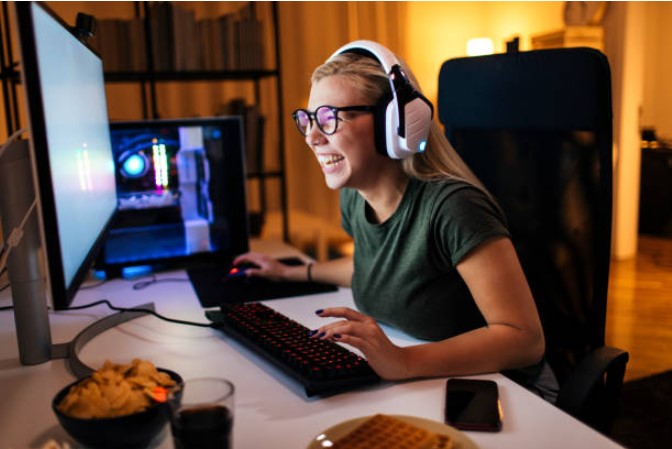
Have you noticed how many online games now feel like a mix of sport, entertainment, and social space all at once?
Modern online gaming is no longer only about completing levels or beating a high score. Many games combine competitive systems, live events, communication tools, shared spaces, and long-term progression.
That mix gives players more ways to take part, whether they want to compete seriously, relax casually, or spend time with other people.
For players, understanding how these elements overlap can make it easier to choose games that fit their interests, time, and comfort level.
Competition Gives Players Clear Goals
Competition is one of the oldest parts of gaming, but online connectivity has made it much more immediate.
Players can now compete with people from different places in real time.
Competitive Systems Can Take Different Forms
A game may include:
- Ranked matches
- Leaderboards
- Tournaments
- Team competitions
- Skill-based matchmaking
- Seasonal rankings
These systems give players measurable goals and can make improvement feel more visible.
However, competition can also create pressure. Players who become frustrated after losses may benefit from taking a break instead of immediately trying to recover a rank or win streak.
Entertainment Goes Beyond Winning or Losing
Not every player enters a game to compete.
Modern online slotgacor games often include visual storytelling, exploration, customisation, music, animation, or creative modes that make the experience enjoyable even without a strong focus on winning.
Games Can Offer Different Kinds of Fun
One player may care about ranking highly.
Another may prefer:
- Exploring a world
- Completing a story
- Collecting items
- Customising a character
- Building something
- Trying different game modes
This flexibility allows the same game to appeal to people with very different motivations.
Social Interaction Has Become a Major Part of Gaming
Online games increasingly function as places where people communicate as well as play.
Players may talk, cooperate, compete, or simply spend time in the same digital environment.
Common social features include:
- Voice chat
- Text messaging
- Player groups
- Cooperative missions
- Shared events
- Friend systems
These features can make gaming feel more connected.
At the same time, players mahjong should use normal online safety habits. Personal information, passwords, financial details, and unfamiliar links should be handled cautiously.
Cooperative Play Combines Socialising With Progress
Competition is not the only way games bring people together.
Cooperative games ask players to work toward a shared objective.
Teamwork Changes the Experience
A group may need to:
- Complete a mission
- Defend an objective
- Solve a challenge
- Explore an area
- Defeat a difficult opponent
The social side becomes part of the gameplay itself.
Communication, timing, and cooperation can matter as much as individual skill.
Competitive Games Can Still Be Social
Competing against someone does not always mean the experience is unfriendly or isolated.
Many competitive games also include team communication, shared communities, and social features outside the match.
Rivalry and Community Can Exist Together
Players may compete intensely during a match and still:
- Share strategies afterward
- Join the same community
- Watch events together
- Discuss updates
- Practice as a group
This combination is one reason online gaming can feel more like an ongoing digital environment than a single isolated game.
Live Events Make Games Feel More Like Entertainment Platforms
Many online games now include temporary events, seasonal updates, or limited-time activities.
These can make a game feel more like a changing entertainment service than a static product.
Events Give Players New Reasons to Return
A live event might introduce:
- New challenges
- Different maps
- Temporary modes
- Story updates
- Community objectives
These additions can make the experience feel fresh.
Players should still remember that they do not need to complete every temporary event. Choosing the activities they actually enjoy can prevent gaming from feeling like an obligation.
Streaming and Spectating Add Another Layer
Online gaming is not always about actively playing.
Watching others play has become part of the broader gaming experience.
Games Can Be Entertainment Even From the Sidelines
Players may watch:
- Competitive matches
- Live streams
- Tutorials
- Community events
- High-level gameplay
This means a game can function as something to play, something to watch, and something to discuss.
That blend brings gaming closer to other forms of digital entertainment.
Progression Keeps Players Connected Over Time
Many online games include systems that continue across several sessions.
Levels, rankings, achievements, unlocks, or seasonal progress can give players long-term goals.
Progress Can Support Both Competition and Social Play
A player may want to improve a ranking, unlock something cosmetic, or progress alongside friends.
However, it is useful to understand what progression actually represents.
A high level may show time spent playing, while a competitive rank may reflect something different.
Personalisation Makes Social Spaces Feel More Individual
Customisation allows players to express themselves inside a game.
This may include character appearance, profile items, badges, equipment styles, or interface settings.
Identity Can Become Part of the Experience
Personalisation can help players feel more connected to a game or community.
However, when cosmetic or digital items cost real money, players should check whether the purchase is optional and whether it genuinely adds enough value for them.
Small purchases can add up quickly when repeated.
Mobile Gaming Makes Social Play More Accessible
Smartphones and tablets have made online gaming easier to access throughout the day.
Players can join short matches, communicate with friends, or check progress from different locations.
Convenience Can Also Extend Session Time
Easy access can make it tempting to keep checking the game repeatedly.
Notifications, social invitations, and temporary events can all encourage frequent returns.
Adjusting notification settings or setting personal time limits can help keep play manageable.
Online Gambling Uses Some Similar Engagement Elements
Some gambling-related games also use animation, social-style interfaces, live features, or competitive-looking elements.
These similarities can make the experience feel more like general gaming.
The Financial Risk Is Still Different
When real-money gambling is involved, players should keep that distinction clear.
Random outcomes, bonus features, or social presentation do not turn gambling into a reliable way to earn income.
A fixed entertainment budget is important, and money needed for rent, food, bills, savings, or other essentials should never be used for gambling.
Social Features Need Boundaries Too
The social side of gaming can be enjoyable, but it can also create pressure to stay online.
A player may continue because friends are still playing or because a team depends on them.
Plan Stopping Points in Advance
It can help to decide:
- How long the session will last
- How many matches will be played
- Whether spending is involved
- What point means it is time to stop
Clear limits make it easier to enjoy both the social and competitive sides without letting them take over other responsibilities.
Conclusion
Online gaming increasingly blends competition, entertainment, and social interaction into one connected experience.
Rankings and matches provide competition, stories and visual design provide entertainment, while communication tools and shared activities create social spaces.
That combination gives players more ways to enjoy games, but it also makes awareness of time, spending, privacy, and personal limits more important.
The most useful approach is to choose the parts of online gaming that genuinely feel enjoyable and keep competition, social pressure, and spending in perspective.