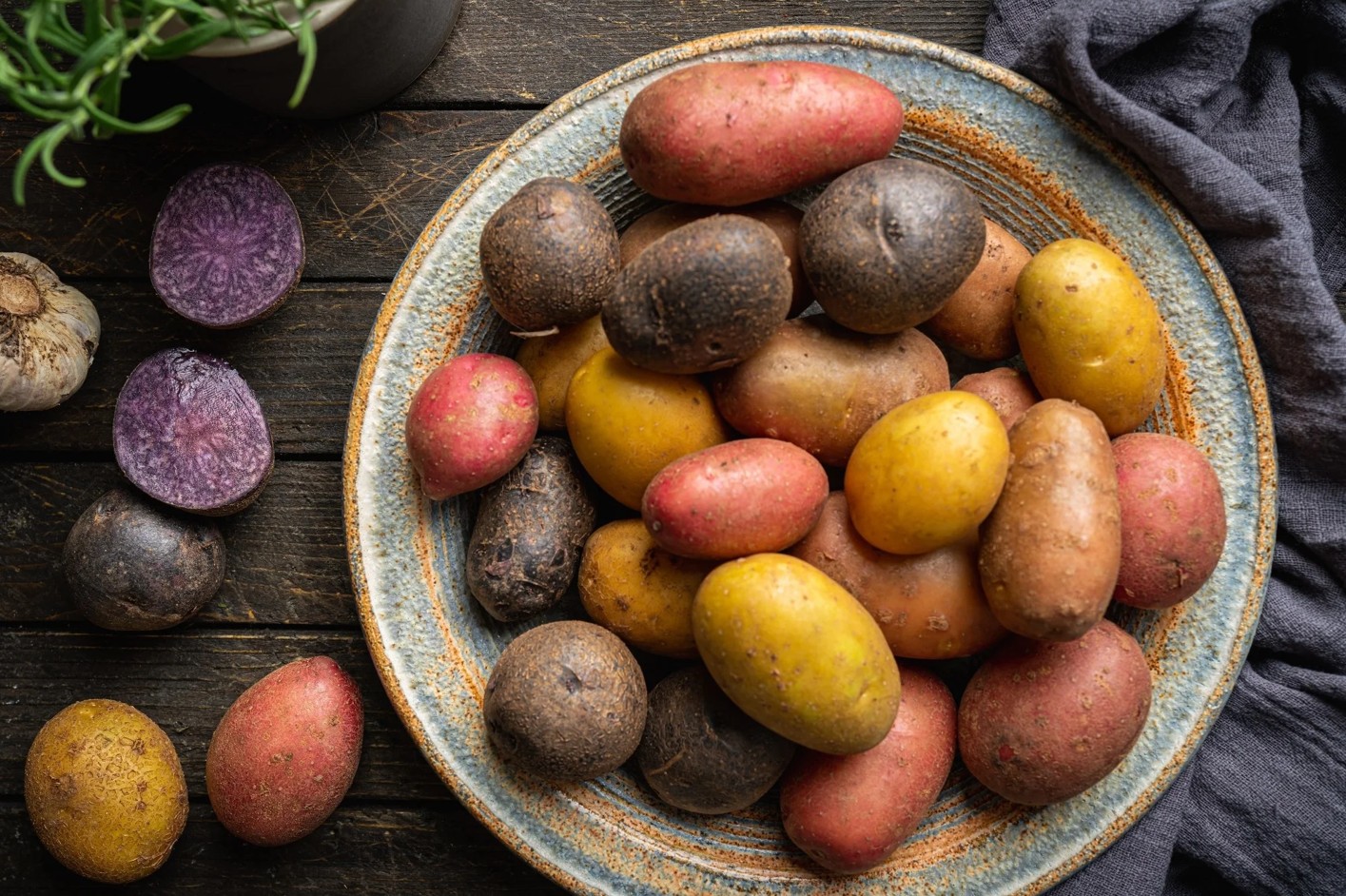
One of the most common items in kitchens all around the globe is potatoes. They may be added to a variety of dishes or baked, boiled, roasted, or mashed. Potatoes’ nutritional qualities might differ according to their color, variety, cooking technique, and whether or not the skin is consumed, despite the fact that they are often categorized as a single item.
Every kind of potato, from colorful red and purple variants to classic white and yellow ones, has something unique to offer. It may be simpler to choose potatoes in accordance with meal plans and individual dietary preferences if you are aware of these variations.
White Potatoes With Daily Nutrition
One of the most well-known types of potatoes is white. They mainly provide carbs, which are a vital source of energy for the body. In addition, they contain trace levels of potassium, vitamin B6, vitamin C, and a number of other minerals.
Eating potatoes with their peel has the benefit of increasing fiber intake. Fiber promotes healthy digestion and may help you feel satisfied after eating.
Additionally, preparation is important. The nutritional profile of a boiled or baked white potato differs greatly from that of a potato that has been deep-fried or served with a lot of butter, cheese, or creamy sauces. As a result, it is better to evaluate the meal as a whole rather than just the potato.
The Vibrant Skin Of Red Potatoes
Red potatoes are easily identified by their light-colored flesh and thin, reddish skin. Their unique color is attributed to natural plant chemicals found in their skin. Red potatoes are often cooked and consumed without peeling due to their comparatively thin skin.
For those who want to keep the fiber and other nutrients present around the potato’s outside, this makes them a practical choice. Along with carbs that provide dietary energy, red potatoes also include potassium and vitamin C.
They are especially good for boiling, roasting, soups, and potato salads because of their tough, waxy texture. A well-balanced and tasty entrée may be made by cooking them with vegetables, herbs, and small quantities of extra oil.
Yellow Potatoes Provide More Than Just Color
The texture and flavor of yellow potatoes, notably those with naturally golden flesh, are smooth and somewhat rich. Carotenoids are naturally occurring pigments that give them their color. Many orange and yellow fruits and vegetables also contain these substances.
Yellow potatoes are rich in potassium, carbs, vitamin C, and vitamin B6, much like other potatoes. Because of their inherent creamy texture, they may be used in roasted or mashed meals without the need for a lot of rich ingredients.
There is no meaningful response to the question, are potatoes healthy, based just on the term “potato.” How potatoes fit into a person’s general eating pattern depends on a number of factors, including variety, portion size, cooking method, toppings, and the rest of their diet.
Natural Pigments And Purple Potatoes
The rich blue, violet, or purple flesh and skin of purple potatoes make them instantly noticeable. Anthocyanins, a class of naturally occurring pigments found in foods like blueberries, blackberries, and red cabbage, give them their distinctive look.
Purple potatoes are an intriguing way to add more color and variation to meals since anthocyanins offer antioxidant qualities. The well-known potato nutrients, such as potassium, vitamin C, and carbs, are still present in purple potatoes.
They don’t need complex preparation because of their distinctive color. They may be cooked, boiled, roasted, or added to salads. Their inherent flavor, texture, and color may continue to play a major role in the dinner by keeping preparation very easy.
The Nutritional Profile Of Sweet Potatoes Is Different
Sweet potatoes are botanically distinct from ordinary potatoes, despite their name. However, since they are made and served similarly, they are often compared.
Beta-carotene, which the body may convert into vitamin A, is particularly noteworthy in orange-fleshed sweet potatoes. Anthocyanins are among the many pigments found in purple sweet potatoes. In addition, sweet potatoes include carbs, potassium, fiber, and vitamin C.
Sweet and ordinary potatoes may be seen as distinct meals with different nutrients and flavors rather than as nutritional rivals.
Preparation Can Make A Significant Difference
How a potato meal is cooked greatly affects its nutritional content. Potatoes may be prepared practically by baking, steaming, roasting, or boiling while controlling other ingredients. Retaining fiber may also be aided by keeping edible peels whole.
On the other hand, eating a lot of fried potatoes or stuffing them with a lot of salt and rich toppings might significantly alter the meal’s nutritional value.
Bringing More Potato Variety To The Plate
Despite their image as a straightforward starchy dish, potatoes provide a great deal of variety. Yellow potatoes include carotenoid hues, purple potatoes have vibrant anthocyanins, red potatoes make the skin easy to eat, and white potatoes provide familiar variety.
Not every dish has to have the same diversity. By switching up the potatoes, you may add fresh hues, textures, flavors, and nutrients to regular meals. In the end, it is more significant to select a range of whole foods and pay attention to preparation techniques than to declare one variety of potato to be superior to another.